Bangladesh's expert in menstrual health and SRHR education
Since 2016, we have designed, tested and scaled culturally sensitive, evidence-based approaches that work in Bangladesh's schools, madrasas, slums, villages and remote communities. Governments, UN agencies and international NGOs, including UNICEF and WaterAid Bangladesh, have drawn on our expertise.
- 300+
- school sessions across the country
- 22
- districts reached
- 3,400
- Chakma-speaking girls in 7 schools
- 1 in 3
- girls knows about periods before the first one
Why it matters
Only about a third of girls in Bangladesh know about menstruation before their first period. Myths, shame and silence lead to missed school days, poor health and early marriage. Boys grow up learning from rumours and pornography instead of facts.
In-person sessions
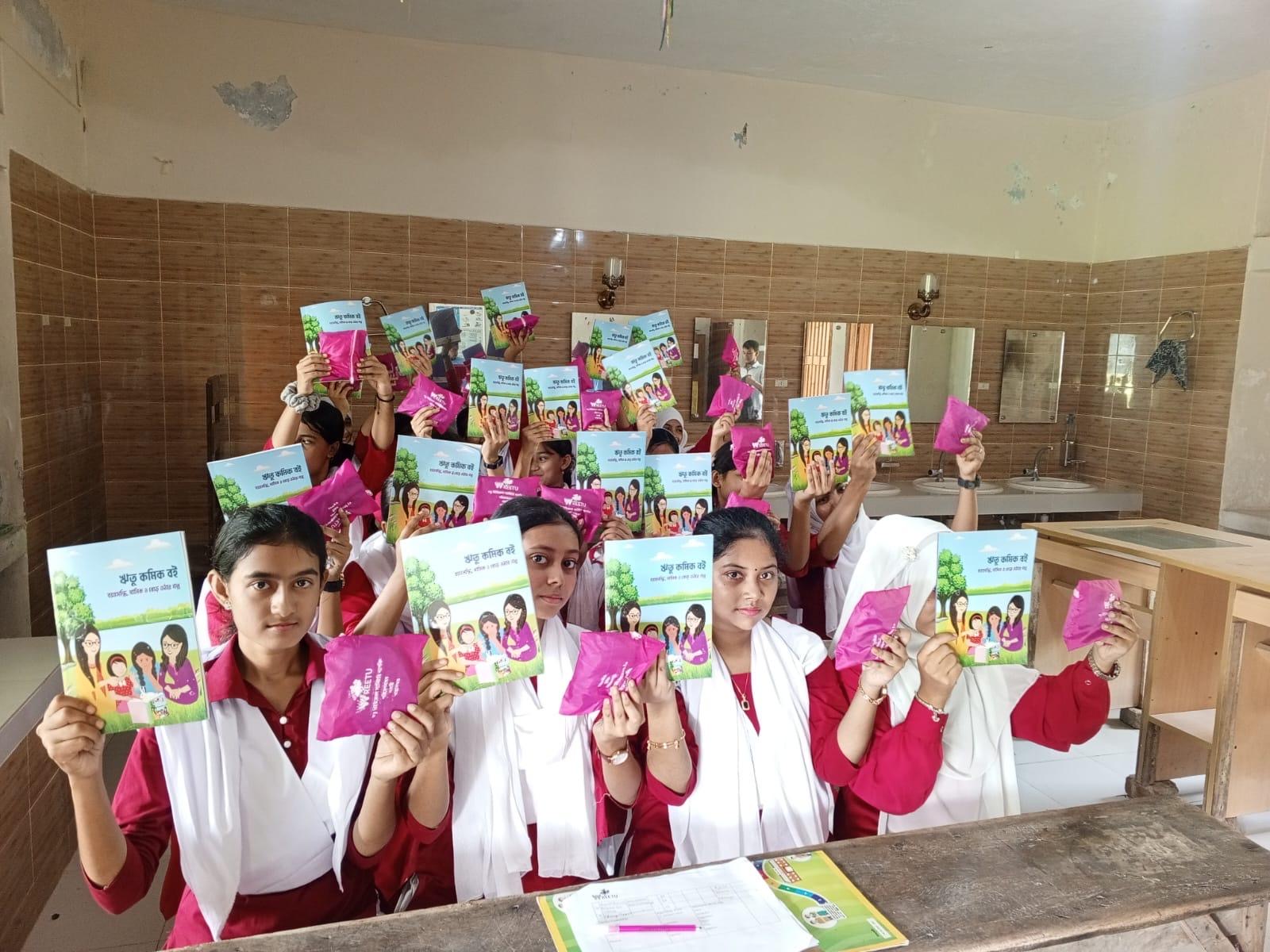
Our trained facilitators run interactive sessions on puberty, menstrual health and hygiene (MHH) and SRHR in schools, slum schools, madrasas and communities, for adolescents in and out of school. More than 300 school sessions have taken place across 22 districts.
Through the Whole School Approach, we build the capacity of teachers and school management to create safe, inclusive, period-friendly schools.
Online learning
Our online course ‘বয়ঃসন্ধি এবং মাসিক’ prepares girls aged 8 to 14 for puberty and their first period. Through 7teen, our digital platform for teens aged 13 to 19, young people access trusted SRHR information in Bangla, ask questions anonymously and join safe online discussions. Bangla-speaking girls in the USA, Canada and Malaysia also learn with us.
Learning young people enjoy
We use game-based and participatory methods: storytelling through our illustrated comic books, quizzes, role-play, interactive games and gamified digital content on 7teen. Sessions are fun, age-appropriate and judgement-free, so both girls and boys feel safe to ask questions and learn together.
We bring boys and girls into the same conversation. When boys understand menstruation, they stop teasing, start supporting, and help build a safe school campus for girls.
From home to mosque
Lasting change needs the whole community. We engage mothers, fathers, teachers, community leaders and religious leaders, so the conversation continues at home, at school and in places of worship. This whole-of-community approach shifts social norms and makes change last.
Leaving no one behind
We teach indigenous girls in their mother tongue. Our Chakma-language sessions and comic book have reached 3,400 girls in 7 schools in Rangamati and Khagrachari.
What changes
Girls who join our sessions see periods as normal and healthy, and they miss fewer school days. Parents tell us their daughters were not afraid when their first period came.
Common questions
What age groups do Wreetu's sessions cover?
Our online course prepares girls aged 8 to 14 for puberty and their first period, 7teen serves teens aged 13 to 19, and our in-person sessions reach adolescents in and out of school, as well as parents, teachers and community leaders.
Do boys attend Wreetu's menstrual health sessions?
Yes. We bring boys and girls into the same conversation. When boys understand menstruation, they stop teasing and start supporting girls at school.
Does Wreetu teach in indigenous languages?
Yes. Our Chakma-language sessions and comic book reach indigenous girls in Rangamati and Khagrachari in their mother tongue.
More of our programs
Book a session for your school or community
Tell us about your school, madrasa or community and we'll plan a session that fits.